
As a form, variations have long fascinated me. While studying trombone I encountered many examples of theme with variations in the literature, most of these written by performers more interested in virtuosic displays than in fully wringing the musical possibilities from a tune. I spent a lot of my practice time determining which notes and figures in each variation corresponded with which notes in the original melody. When I began to study composition, I worked with this form to learn my craft. It was an effective way to explore efficient and creative use of melodic material. I have returned to the variation form after almost a decade to further hone my skills and grow as a composer.

The theme for this set is the chord progression from George Gershwin’s I Got Rhythm (called simply rhythm changes among jazz musicians). Variations on harmonic rather than melodic themes are nothing new; Bach’s Goldberg Variations—and indeed every improvised jazz solo—are just that. My desire was to use rhythm changes to focus on differences in mood and in the established canon of piano literature. The end result is a set twelve short compositions that are related only through a common harmonic. In some cases, Gershwin’s harmonies are readily apparent and at other times they are relegated to a structural role, away from the surface of the music, where they guide the composition at a conceptual level.

the score (pdf)

•••

The Changes
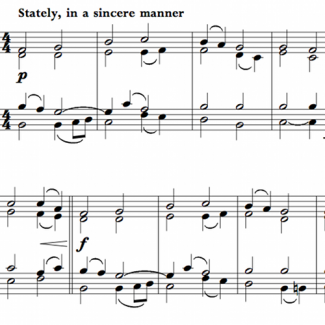
The "theme" for this set of variations is presented here in a simple chorale style.

Hanon's Distracted Virtuoso Variation
Practicing one's scales and technical exercises can be tedious. Here’s what happens when that tedium takes over.

Krupa's Toccata Variation
In the orchestra the piano will be grouped with the percussion section, supporting the claim that it is indeed a cross between a percussion and a stringed instrument. Is the piano really just a big drum?

The Wind-Up Variation
This simple movement is reminiscent of a mechanical music box.

The Stride Varation
The stride style, a staple of the jazz pianist, is here given an unusual off-kilter treatment.

The Light Blue Fughetta Variation
The first of two movements exploring a blues extension of the original form, this variation is built from several common blues motives.

The Left Handed Variation
For one hand only, this movement is composed from standard, left handed boogie-woogie patterns.

The Ill-Tempered Variation
Bach's music is difficult for many pianists and can be an endless source of frustration. This variation only makes things worse.

The Dark Blue Song Varation
This variation, the second to use the blues form, is built around the tension inherent in "blue notes."

The Meditative Variation
Derived from the minimalist style, this variation presents rhythm changes in its barest harmonic statement.

Bird's Stream-of-Consciousness Variation
Charlie Parker's innovative bebop style is explored fully in this wild variation.

The Shortest Variation
This concise statement is short in length and articulation.

The Funkish Variation
Based on a jazz-funk groove, this final variation is built from a couple of motives that are recombined in several ways.